
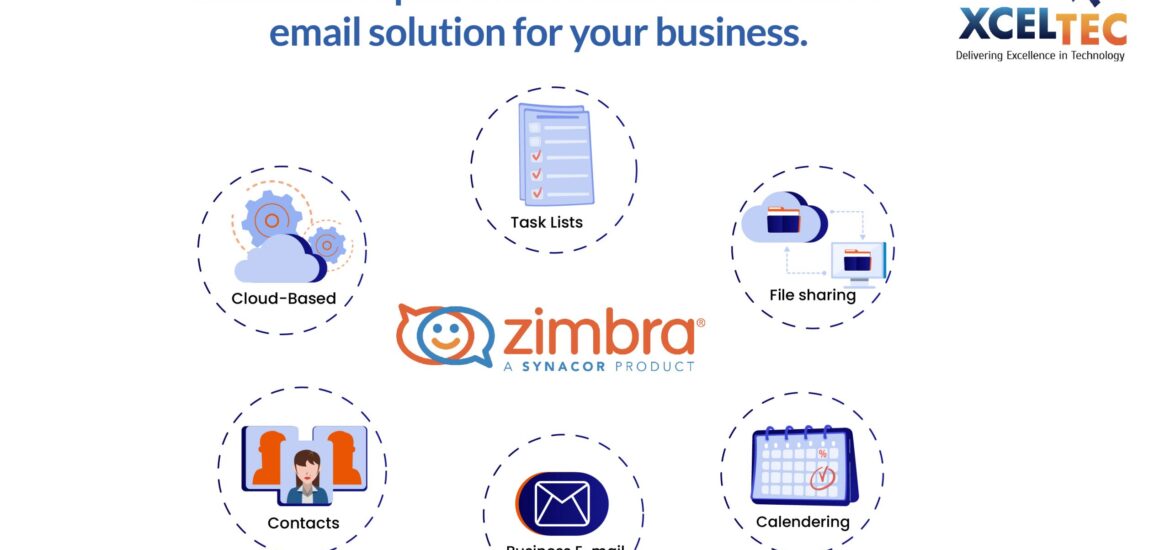
Zimbra Email Hosting: An Open-Source & Collaborative Hosting Solution For Your Business
Zimbra Email Hosting: A Secure, Flexible, and Collaborative Email Solution for Modern Businesses
Email remains one of the most important communication channels for modern organisations. Businesses depend on email every day to communicate with customers, collaborate with teams, share documents, manage schedules, and coordinate business operations.
As organisations grow, managing email infrastructure becomes increasingly complex. Businesses need an email platform that offers reliability, security, collaboration, scalability, and control over business data.
Zimbra Email Hosting is an open-source collaboration and email platform designed to help organisations manage business communication and productivity from a central solution.
With features such as enterprise email, calendars, contacts, tasks, file sharing, collaboration tools, security controls, and backup capabilities, Zimbra can be a flexible option for businesses evaluating alternatives to traditional email platforms.
What Is Zimbra?
Zimbra is an enterprise collaboration and email platform that combines business email with productivity and communication tools.
Depending on the deployment model, businesses can use Zimbra to manage:
- Business email
- Calendars
- Contacts
- Tasks
- Address books
- Document collaboration
- File sharing
- Search
- Email administration
- Security controls
Zimbra can be deployed and managed according to an organisation’s infrastructure, security, compliance, and operational requirements.
This flexibility makes it suitable for businesses that want greater control over their email environment.
Why Is Business Email Hosting Important?
Email is often responsible for the exchange of highly important business information, including:
- Customer communication
- Financial information
- Contracts
- Internal documents
- Project updates
- Business plans
- Operational information
For this reason, email hosting should be evaluated as a core business technology rather than simply a communication tool.
A suitable business email platform should provide:
- Reliable availability
- Strong security
- Data protection
- User management
- Backup and recovery
- Collaboration capabilities
- Scalability
- Administrative control
Zimbra addresses these requirements through a combination of email, collaboration, administration, and security features.
Key Benefits of Zimbra Email Hosting
1. Open-Source Flexibility
One of the most important advantages of Zimbra is its open-source foundation.
For technology decision-makers, this can provide greater flexibility in how the platform is evaluated, deployed, configured, and managed.
Businesses can benefit from:
- Greater control over the email environment
- Deployment flexibility
- Customisation opportunities
- Reduced dependence on a single proprietary platform
- Access to an active technology ecosystem
Open-source technology can be particularly valuable for organisations that want greater visibility and control over their technology infrastructure.
2. Business-Class Email and Collaboration
Zimbra is more than an email server.
It combines communication and collaboration capabilities in one platform, allowing users to manage important productivity tools from a unified environment.
Users can work with:
- Calendars
- Contacts
- Tasks
- Address books
- Documents
- Shared information
This can help reduce the need to manage multiple disconnected tools for everyday communication and collaboration.
3. Access Across Multiple Devices
Modern businesses need employees to work from different locations and devices.
Zimbra enables users to access business communication and collaboration tools through devices such as:
- Desktop computers
- Laptops
- Tablets
- Mobile phones
This can support remote work, hybrid teams, travelling employees, and distributed business operations.
4. Security Features for Business Communication
Email security is a major concern for IT managers and technology leaders.
Business email accounts can be targeted by:
- Phishing attacks
- Malware
- Spam
- Account compromise
- Unauthorised access
- Data interception
Zimbra provides security features designed to help organisations strengthen their email infrastructure.
Depending on the deployment and configuration, security capabilities may include:
- SSL/TLS protection
- Two-factor authentication
- S/MIME support
- Digital signatures
- Email encryption
- Anti-spam protection
- Mail transfer security controls
Security should always be implemented as part of a broader organisational security strategy, including access controls, monitoring, backups, and employee awareness.
5. Centralised Administration
Managing users, accounts, domains, permissions, and policies becomes increasingly important as a company grows.
A centralised email administration system can help IT teams manage:
- User accounts
- Email domains
- Access permissions
- Email policies
- Storage requirements
- Security settings
- System configuration
This can simplify administration and provide IT teams with greater visibility over the organisation’s email environment.
6. Backup and Recovery Capabilities
Business email often contains information that organisations cannot afford to lose.
Data loss can occur due to:
- Hardware failure
- Human error
- Cybersecurity incidents
- System problems
- Accidental deletion
A reliable backup and recovery strategy can help businesses restore important email data and reduce the impact of unexpected incidents.
Zimbra environments can be supported with backup and restore solutions designed to protect email and collaboration data.
However, organisations should always define a complete backup strategy based on their recovery time objectives, recovery point objectives, retention policies, and compliance requirements.
7. Scalable for Growing Organisations
Businesses may start with a small number of email users and expand over time.
A suitable email hosting solution should be able to support organisational growth.
Zimbra can be deployed according to different infrastructure requirements, including:
- Single-server environments
- Multi-server architectures
- Larger enterprise deployments
This flexibility allows businesses to design their email infrastructure based on current requirements while planning for future expansion.
8. Improved Collaboration
Business productivity increasingly depends on effective collaboration.
Zimbra can bring communication and productivity features together in one environment.
For example, teams may use the platform to manage:
- Shared calendars
- Contacts
- Tasks
- Email conversations
- Documents
- Collaborative information
A centralised collaboration environment can help teams improve communication and organise information more efficiently.
Zimbra Email Hosting vs. Traditional Email Infrastructure
Businesses evaluating email platforms should consider more than just the cost of hosting.
A modern business email solution should be evaluated based on:
| Evaluation Area | Business Requirement |
|---|---|
| Security | Protection against unauthorised access and email-based threats |
| Scalability | Ability to support future user and business growth |
| Administration | Efficient management of users, domains, and policies |
| Collaboration | Integrated productivity and communication features |
| Backup | Protection and recovery of important business data |
| Flexibility | Deployment options suited to business requirements |
| Accessibility | Access across devices and locations |
Zimbra can be a strong option for organisations that want a combination of email, collaboration, control, and deployment flexibility.
Zimbra Deployment Options
The appropriate Zimbra architecture depends on the size and technical requirements of the organisation.
Single-Server Deployment
A single-server deployment may be suitable for smaller organisations with relatively straightforward email requirements.
Multi-Server Deployment
Larger organisations may require multiple servers to improve:
- Scalability
- Performance
- Availability
- Infrastructure management
Customised Enterprise Deployment
Businesses with complex infrastructure, security, integration, or operational requirements may benefit from a customised deployment architecture.
The right deployment should be selected after evaluating:
- Number of users
- Email traffic
- Storage requirements
- Availability requirements
- Security policies
- Backup requirements
- Future growth
How XcelTec Can Help with Zimbra Email Hosting
Implementing a business email platform requires more than simply installing software.
The infrastructure must be properly planned, configured, secured, migrated, and maintained.
XcelTec can assist businesses with Zimbra-related services, including:
Zimbra Installation
Professional installation and configuration of Zimbra email environments.
Zimbra Deployment
Support for different deployment architectures based on organisational requirements.
Zimbra Migration
Migration of existing email accounts, mailboxes, and relevant data to a Zimbra environment.
Zimbra Architecture Planning
Designing a suitable email infrastructure for business requirements, scalability, security, and performance.
Zimbra Security Configuration
Configuring appropriate security controls to help protect business email environments.
Zimbra Backup and Recovery
Helping businesses establish suitable backup and recovery processes for email and collaboration data.
Ongoing Support
Providing technical assistance for administration, maintenance, troubleshooting, and future infrastructure requirements.
Why Choose an Experienced Zimbra Service Provider?
For IT managers and technology decision-makers, selecting the right implementation partner can be as important as selecting the platform itself.
An experienced Zimbra service provider can help organisations:
- Evaluate their existing email infrastructure
- Plan the right deployment architecture
- Minimise migration risks
- Configure security controls
- Manage user and domain requirements
- Plan backup and recovery
- Support future scalability
Professional implementation can help organisations avoid common problems related to configuration, migration, security, and system availability.
Conclusion
Zimbra provides businesses with a flexible and collaborative approach to enterprise email hosting.
Its combination of business email, collaboration tools, administrative control, security capabilities, device accessibility, and deployment flexibility makes it a solution worth considering for organisations evaluating their email infrastructure.
For IT managers and technology decision-makers, the key advantage of Zimbra is the ability to build an email environment that aligns with the organisation’s technical, security, operational, and scalability requirements.
Whether a business is migrating from an existing email platform, building a new email infrastructure, or looking for greater control over business communication, a professionally planned Zimbra deployment can provide a strong foundation for modern business collaboration.
XcelTec helps businesses plan, deploy, migrate, and manage technology solutions aligned with their business requirements. Our team can assist organisations evaluating Zimbra email hosting and collaboration solutions with implementation, migration, infrastructure planning, and technical support.
Frequently Asked Questions
1. What is Zimbra email hosting?
Zimbra email hosting is a business email and collaboration solution that provides features such as email, calendars, contacts, tasks, document collaboration, administration, and security controls.
2. Is Zimbra suitable for businesses?
Yes. Zimbra can be suitable for businesses of different sizes, particularly organisations that require business email, collaboration tools, scalability, and greater control over their email infrastructure.
3. Can existing email data be migrated to Zimbra?
Yes. Existing email accounts and mailbox data can be migrated to Zimbra as part of a professionally planned email migration process. The migration approach depends on the existing email platform, data volume, account structure, and business requirements.
4. Can Zimbra be accessed from mobile devices?
Yes. Users can access their email and relevant collaboration tools through supported desktop and mobile devices, helping employees work across different locations and environments.