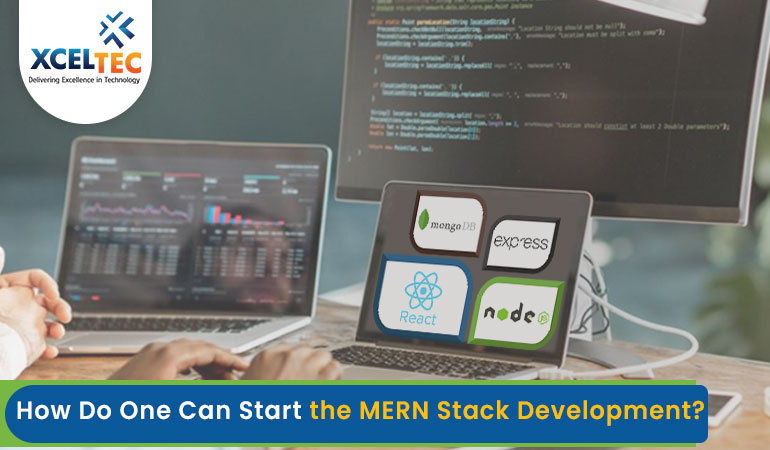
How Do One Can Start the MERN Stack Development?
How Can You Start MERN Stack Development? A Beginner’s Guide
Modern web applications require powerful front-end experiences, scalable back-end systems, and efficient databases. For beginners entering the world of full-stack web development, choosing the right technology stack can make the learning process much easier.
The MERN stack is one of the most popular JavaScript-based technology stacks for building modern web applications. It allows developers to use JavaScript across the entire development process—from the user interface to the server and database.
MERN stands for:
- MongoDB – Database
- Express.js – Backend web framework
- React – Frontend library
- Node.js – JavaScript runtime environment
If you are completely new to web development, this guide explains what MERN is, how its technologies work together, and how you can begin learning MERN stack development step by step.
What Is the MERN Stack?
The MERN stack is a collection of technologies used to build full-stack web applications.
A typical MERN application follows this structure:
React → Express.js and Node.js → MongoDB
The user interacts with the React frontend. React sends requests to the backend, which is built using Node.js and Express.js. The backend then communicates with MongoDB to store or retrieve data.
The response is then sent back to the frontend and displayed to the user.
One of the major advantages of MERN development is that developers can use JavaScript throughout the application stack.
Understanding the Four Technologies in MERN
1. MongoDB: The Database
MongoDB is a NoSQL document database used to store application data.
Unlike traditional relational databases that store information in tables and rows, MongoDB stores data in flexible document structures.
A simple MongoDB document may look like this:
{
  "name": "John",
  "email": "john@example.com"
}
MongoDB is popular in MERN development because its document-based structure works well with JavaScript applications.
It can be used to store:
- User accounts
- Product information
- Blog posts
- Orders
- Application settings
- Customer records
For beginners, MongoDB is relatively easy to understand because data is represented in a structure similar to JSON.
2. Express.js: The Backend Framework
Express.js is a lightweight web framework built on Node.js.
It helps developers create the backend of web applications and APIs.
For example, an Express.js application can create routes such as:
/users/products/orders/login
A request from the React frontend can be sent to the Express backend, which processes the request and returns the required response.
Express.js is commonly used for:
- API development
- Routing
- Authentication
- Middleware
- Request handling
- Server-side application logic
3. React: The Frontend Library
React is a JavaScript library used to create interactive user interfaces.
It was originally developed by Facebook and is widely used for modern web application development.
React allows developers to divide an application into reusable components.
For example, an e-commerce website might include components such as:
- Navigation bar
- Product card
- Shopping cart
- Checkout form
- User profile
Instead of building every page from scratch, developers can create reusable components and use them throughout the application.
React also uses a virtual DOM, which helps efficiently update parts of the user interface when data changes.
4. Node.js: The JavaScript Runtime
Node.js allows JavaScript to run outside the browser.
Before Node.js, JavaScript was primarily associated with frontend development. Node.js made it possible to use JavaScript for server-side development as well.
Node.js is designed around an asynchronous, event-driven architecture.
This means it can handle multiple operations efficiently without waiting for every task to finish before starting another.
Node.js is commonly used for:
- Web servers
- REST APIs
- Real-time applications
- Chat applications
- Backend services
- Microservices
How Does a MERN Application Work?
A typical MERN application follows a request-response process.
Step 1: The User Interacts with React
A user may click a button, submit a form, or request information.
For example, a user may submit a login form.
Step 2: React Sends a Request
React sends the user’s information to the backend through an API request.
Step 3: Express and Node.js Process the Request
The Express.js backend receives the request.
Node.js executes the backend logic and determines what action should be performed.
Step 4: MongoDB Stores or Retrieves Data
The backend communicates with MongoDB.
For a login request, MongoDB may be used to find the user’s account information.
Step 5: The Response Returns to React
The backend sends a response to the React application.
React then updates the user interface based on the result.
This entire process may happen within seconds.
How Can Beginners Start MERN Stack Development?
If you are completely new to web development, learning the MERN stack in the right order is important.
Step 1: Learn the Fundamentals of Web Development
Before learning MERN, start with the basics.
You should understand:
- HTML
- CSS
- Basic JavaScript
- How websites work
- HTTP requests
- Browsers
- Client-server communication
HTML provides the structure of a webpage.
CSS controls its appearance.
JavaScript adds logic and interactivity.
These fundamentals create the foundation for learning React and backend development.
Step 2: Learn JavaScript Properly
JavaScript is the core language of the MERN stack.
Before moving to React or Node.js, beginners should understand important JavaScript concepts such as:
- Variables
- Functions
- Arrays
- Objects
- Loops
- Conditions
- Scope
- Modules
- Promises
- Async/await
- Error handling
You should also understand modern JavaScript features such as:
- Arrow functions
- Destructuring
- Spread operators
- Template literals
- Array methods
- Import and export
A strong JavaScript foundation makes learning the rest of the MERN stack significantly easier.
Step 3: Learn Git and Development Tools
Git is an essential tool for modern software development.
You should learn how to:
- Create repositories
- Commit code
- Create branches
- Track changes
- Collaborate with other developers
You should also become familiar with:
- Code editors
- Command-line tools
- Package managers
- Browser developer tools
These tools will become part of your daily development workflow.
Step 4: Learn React
Once you understand JavaScript, begin learning React.
Start with:
- Components
- JSX
- Props
- State
- Events
- Conditional rendering
- Lists
- Forms
- Hooks
A good beginner project could be:
- To-do application
- Weather application
- Blog interface
- Product catalogue
- Expense tracker
Building projects is one of the most effective ways to understand React.
Step 5: Learn Node.js
After gaining experience with frontend development, learn Node.js.
Understand:
- How servers work
- Modules
- npm
- File systems
- HTTP servers
- Asynchronous programming
- Environment variables
Node.js allows you to use JavaScript for backend development.
Step 6: Learn Express.js
Once you understand Node.js, move on to Express.js.
Learn how to create:
- Routes
- APIs
- Middleware
- Request handlers
- Error handling
For example, you might create an API such as:
GET /api/products
POST /api/products
PUT /api/products/:id
DELETE /api/products/:id
These API endpoints allow the React frontend to communicate with the backend.
Step 7: Learn MongoDB
After understanding the backend, learn how to work with MongoDB.
Important concepts include:
- Databases
- Collections
- Documents
- Queries
- CRUD operations
- Data relationships
- Indexing
CRUD stands for:
- Create
- Read
- Update
- Delete
These operations are required in almost every application.
Step 8: Connect the Frontend, Backend, and Database
The next step is to connect all four technologies.
A basic MERN application may follow this structure:
React Frontend
      ↓
Express API
      ↓
Node.js Server
      ↓
MongoDB Database
For example:
- A user submits a registration form.
- React sends the form data to the backend.
- Express receives the request.
- Node.js processes the request.
- MongoDB stores the user data.
- The backend returns a response.
- React displays the result to the user.
This is the foundation of full-stack MERN development.
Step 9: Learn Authentication and Security
Once you can build basic applications, you should learn how to protect them.
Important concepts include:
- User authentication
- Password hashing
- JSON Web Tokens
- Role-based access control
- Input validation
- Secure API development
- Environment variables
Security should be considered from the beginning of the development process rather than added only after the application is completed.
Step 10: Build Real-World Projects
The best way to improve your MERN skills is to build complete applications.
Beginner Projects
- To-do application
- Blog application
- Notes application
- Expense tracker
Intermediate Projects
- E-commerce website
- Booking platform
- Social media application
- Learning management system
Advanced Projects
- Real-time chat application
- SaaS platform
- Multi-vendor marketplace
- Business management system
Projects help you understand how frontend, backend, database, authentication, and deployment work together.
MERN Stack vs MEAN Stack
MERN and MEAN are both popular JavaScript-based technology stacks.
| MERN | MEAN |
|---|---|
| MongoDB | MongoDB |
| Express.js | Express.js |
| React | Angular |
| Node.js | Node.js |
React is a library, while Angular is a complete frontend framework.
The right choice depends on the project’s requirements, team expertise, scalability needs, and application architecture.
Why Do Businesses Choose MERN Development?
MERN is suitable for many modern applications because it offers:
Faster Development
Developers can use JavaScript across the stack, reducing the need to switch between different programming languages.
Reusable Components
React components can be reused throughout an application, improving development efficiency.
Scalable Architecture
The stack can support applications ranging from startups and MVPs to complex enterprise platforms when designed correctly.
Strong Ecosystem
The MERN ecosystem includes a large number of libraries, tools, frameworks, and developer resources.
Suitable for Real-Time Applications
Node.js is well-suited for applications that require real-time communication, such as chat platforms and collaboration tools.
Common Mistakes Beginners Should Avoid
Beginners often try to learn all MERN technologies simultaneously. This can make the learning process confusing.
Instead, focus on one technology at a time.
You should also avoid:
- Skipping JavaScript fundamentals
- Copying code without understanding it
- Building only tutorials and no original projects
- Ignoring Git
- Avoiding backend concepts
- Neglecting security
- Trying to learn too many libraries at once
A structured learning path is more effective than trying to learn everything at the same time.
Conclusion
Starting MERN stack development can be an excellent path for beginners who want to learn full-stack web development.
The stack combines MongoDB for data storage, Express.js and Node.js for backend development, and React for creating modern user interfaces. Because JavaScript is used throughout the stack, developers can gradually build skills across both frontend and backend development.
The best way to start is to learn web fundamentals, develop a strong understanding of JavaScript, and then progress through React, Node.js, Express.js, and MongoDB. After learning the core technologies, building complete projects will help you develop practical experience.
If you are a business looking to build a modern web application, scalable SaaS platform, e-commerce solution, or custom enterprise application, XcelTec can help. Our experienced development team provides professional MERN stack development services tailored to specific business and technical requirements.
Looking for a reliable MERN development partner? Contact XcelTec to discuss your project and development requirements.
Frequently Asked Questions
1. Is MERN stack development suitable for complete beginners?
Yes. MERN can be suitable for beginners because all four technologies are connected to JavaScript. However, beginners should first learn HTML, CSS, and JavaScript fundamentals before starting React and backend development.
2. How long does it take to learn the MERN stack?
The time required depends on your learning schedule and previous programming experience. A beginner can start building basic applications after learning the fundamentals, while becoming proficient in full-stack MERN development requires consistent practice and real-world project experience.
3. What should I learn first in the MERN stack?
Start with HTML, CSS, and JavaScript. After that, learn React for frontend development, followed by Node.js and Express.js for backend development, and MongoDB for database management.
4. Can XcelTec help businesses with MERN stack development?
Yes. XcelTec can help businesses build custom MERN applications, APIs, SaaS platforms, e-commerce solutions, and other scalable web applications. Businesses can contact XcelTec to discuss their specific development requirements.