
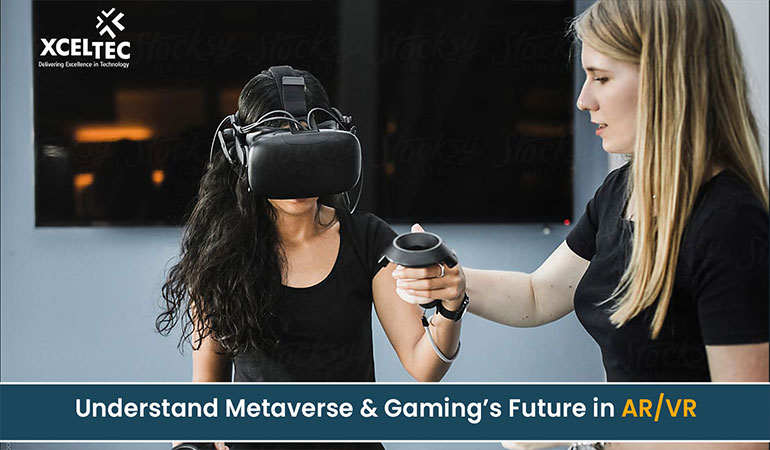
Understand Metaverse & Gaming’s Future in AR/VR
Understanding the Future of the Metaverse and Gaming Through AR and VR
The way people interact with technology is constantly evolving. From personal computers and the internet to smartphones and cloud computing, every major technological advancement has changed how people communicate, work, learn, shop, and entertain themselves.
The next major evolution is expected to be driven by immersive technologies such as Augmented Reality (AR), Virtual Reality (VR), Mixed Reality (MR), Artificial Intelligence (AI), spatial computing, and 3D digital environments.
At the centre of this transformation is the concept of the Metaverse.
The Metaverse represents a collection of immersive and interconnected digital experiences where people can communicate, play games, attend events, work, create digital content, explore virtual environments, and interact with digital assets.
While the concept is still evolving, the gaming industry is already playing a significant role in shaping the future of the Metaverse.
What Is the Metaverse?
The Metaverse can be described as a collection of persistent digital environments where users can interact with one another through digital identities or avatars.
Unlike traditional websites and applications, immersive digital platforms aim to create a stronger sense of presence. Users may be able to communicate, explore virtual environments, participate in games, attend virtual events, create content, and interact with digital objects.
The Metaverse is not necessarily a single platform or application. Instead, it is a broader concept involving multiple technologies, platforms, experiences, and digital ecosystems.
Some of the technologies contributing to the development of the Metaverse include:
- Augmented Reality (AR)
- Virtual Reality (VR)
- Mixed Reality (MR)
- Artificial Intelligence
- Spatial computing
- 3D graphics
- Cloud computing
- Blockchain technology
- Digital identity
- Real-time communication
- Internet of Things (IoT)
The gaming industry has become one of the most important areas where these technologies are being developed and tested.
How AR and VR Are Changing Gaming
Virtual Reality allows players to enter immersive digital environments using VR headsets and controllers. Instead of simply viewing a game on a screen, players can experience a virtual environment from a first-person perspective.
Augmented Reality, on the other hand, combines digital content with the real world. Through smartphones, AR glasses, and other devices, users can see digital objects and information integrated into their physical surroundings.
Mixed Reality combines elements of both physical and digital environments, allowing virtual objects to interact with the real world.
Together, these technologies can transform gaming from a screen-based activity into a more immersive and interactive experience.
Future gaming experiences may allow players to:
- Explore large virtual environments
- Communicate with other players through avatars
- Use natural movement to interact with digital objects
- Participate in live virtual events
- Create and customise digital spaces
- Interact with AI-powered characters
- Move between different connected experiences
The Evolution of Metaverse Gaming
The concept of virtual worlds and online multiplayer experiences is not new to the gaming industry.
Massively multiplayer online games, virtual communities, open-world games, and social gaming platforms have already introduced many of the fundamental concepts associated with the Metaverse.
Modern gaming platforms increasingly combine:
- Multiplayer interaction
- User-generated content
- Virtual economies
- Digital identities
- Live events
- Social communication
- Persistent online worlds
These developments are gradually changing games from standalone products into continuously evolving digital ecosystems.
The Importance of Real-Time Interaction
One of the biggest differences between traditional digital platforms and immersive virtual experiences is the possibility of real-time interaction.
On traditional social platforms, people often communicate through text, images, videos, reactions, and comments.
In immersive environments, users can potentially interact with one another through:
- Avatars
- Voice communication
- Facial expressions
- Body movements
- Virtual objects
- Shared environments
This creates the possibility of a more natural and engaging form of digital communication.
For example, players could attend a virtual concert together, participate in an interactive event, visit a virtual store, or join a digital meeting while represented by their avatars.
The Role of Gaming Platforms
Gaming platforms have become important examples of how virtual worlds can bring together entertainment, social interaction, digital commerce, and user-generated content.
Modern games increasingly offer more than traditional gameplay. They can include live events, virtual concerts, social spaces, creative tools, custom experiences, and digital marketplaces.
This creates opportunities for businesses and brands to engage with users in new ways.
A brand may eventually be able to launch a physical product and create a corresponding digital experience that users can explore inside a virtual environment.
This creates a connection between the physical and digital worlds.
Key Features of Metaverse Gaming
1. Multiplayer Social Experiences
Social interaction is one of the most important characteristics of Metaverse gaming.
Players can connect with friends, communicate with other users, participate in events, and create communities inside virtual environments.
This makes gaming more interactive and social than traditional single-player experiences.
2. User-Generated Content
Future virtual worlds may provide users with tools to create their own content.
Players could potentially create:
- Virtual environments
- Game levels
- Digital objects
- Characters
- Events
- Interactive experiences
This changes users from simple consumers into creators.
3. Digital Avatars and Identity
Digital identity is an important part of immersive experiences.
Users may be represented through custom avatars that can be personalised with different clothing, accessories, appearances, and digital items.
As technology develops, digital identity may become increasingly important across gaming, social platforms, virtual events, and other digital experiences.
4. Digital Assets and Virtual Economies
Many virtual platforms contain digital economies where users can purchase, sell, create, or exchange virtual goods.
Depending on the platform, these assets may include:
- Virtual clothing
- Game items
- Digital collectibles
- Virtual land
- Accessories
- User-created content
Blockchain technology and digital ownership models have also been explored in connection with virtual assets. However, the use of blockchain, NFTs, and cryptocurrencies varies significantly between platforms and should not be considered a requirement for every Metaverse experience.
5. Play-to-Earn and Digital Ownership Models
Some blockchain-based games have experimented with models where users can earn digital assets through gameplay.
However, the future of gaming is likely to focus on creating enjoyable, sustainable, and engaging experiences rather than relying solely on financial incentives.
The most successful platforms will need to balance entertainment, user experience, digital ownership, security, and sustainable virtual economies.
6. Games as Creative Platforms
The future of gaming may involve users creating their own experiences within larger digital ecosystems.
Instead of simply playing a game created by a developer, users may be able to build their own environments, mini-games, stories, and interactive experiences.
This could create a new generation of digital creators and developers.
The Role of Artificial Intelligence
Artificial Intelligence is expected to play an important role in the future of Metaverse gaming.
AI can be used to create:
- Intelligent non-player characters
- Personalised gaming experiences
- Dynamic virtual environments
- Automated content generation
- Real-time translation
- AI-powered assistants
- More realistic character interactions
AI-powered characters may eventually respond more naturally to players and adapt to their actions.
This could make virtual worlds feel more dynamic and personalised.
Challenges Facing the Metaverse
Although the Metaverse offers significant opportunities, several challenges must still be addressed.
These include:
- High hardware costs
- Privacy and data protection
- Cybersecurity
- Digital identity management
- Online safety
- Platform interoperability
- Content moderation
- Technical infrastructure
- User accessibility
For the Metaverse to achieve widespread adoption, platforms must provide secure, accessible, affordable, and user-friendly experiences.
The Future of AR, VR, and Gaming
The future of gaming is likely to become increasingly immersive, social, interactive, and connected.
AR glasses, VR headsets, spatial computing devices, AI, cloud infrastructure, and real-time 3D technologies will continue to influence the development of next-generation gaming experiences.
The future may not be a single virtual world controlled by one company. Instead, it may consist of multiple connected platforms and digital experiences.
Gaming companies, technology businesses, developers, creators, and brands are already exploring new ways to combine entertainment, social interaction, commerce, and immersive technology.
Conclusion
The Metaverse represents an evolving vision of how people may interact with digital environments in the future. AR, VR, AI, spatial computing, real-time 3D technology, and digital identity are all contributing to this transformation.
Gaming is likely to remain one of the strongest drivers of Metaverse innovation because games already provide many of the essential elements required for immersive digital experiences, including virtual worlds, avatars, multiplayer interaction, digital economies, and user-generated content.
Although the Metaverse is still developing, its potential is significant. The future of gaming may extend beyond traditional screens and controllers to create more immersive, interactive, and connected experiences.
At XcelTec, we help businesses explore and develop innovative digital solutions using modern technologies such as AR, VR, AI, game development, and emerging digital platforms.
Get in touch with us to discuss your next technology project.
Contact us: +91 987 979 9459 | +1 919 400 9200
Email: sales@xceltec.com
Frequently Asked Questions (FAQs)
1. What is the Metaverse in gaming?
The Metaverse in gaming refers to immersive and connected digital environments where users can play games, communicate with others, create content, interact through avatars, attend virtual events, and participate in virtual experiences.
2. What is the difference between AR and VR gaming?
VR gaming places users inside a completely digital environment using virtual reality devices. AR gaming combines digital content with the real world using smartphones, smart glasses, or other AR-enabled devices.
3. How can Artificial Intelligence improve Metaverse gaming?
AI can help create intelligent virtual characters, personalised gameplay, dynamic environments, automated content, real-time translation, and more natural interactions between users and digital characters.
4. Will the Metaverse replace traditional gaming?
The Metaverse is unlikely to completely replace traditional gaming. Instead, it may expand gaming into more immersive, social, interactive, and interconnected digital experiences. Traditional games and immersive virtual experiences are likely to coexist.