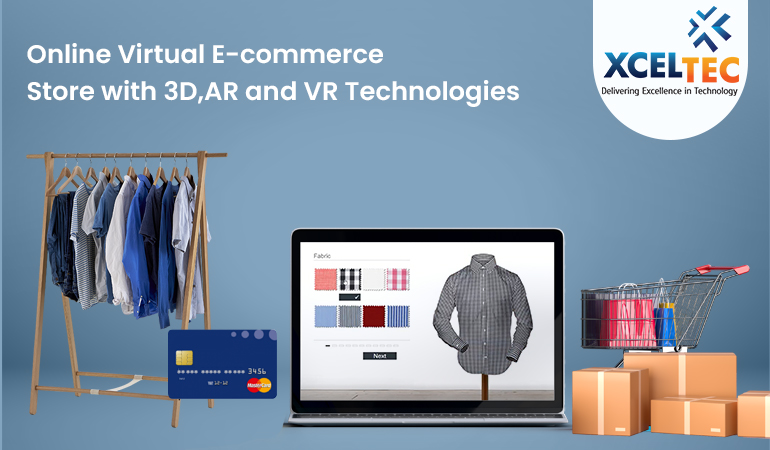
Online Virtual E-commerce Store with 3D, AR and VR Technologies
Virtual E-Commerce Stores: Transforming Online Shopping with 3D, AR and VR
The e-commerce industry is evolving rapidly, and customers now expect more than traditional product listings and static images. Businesses are increasingly exploring immersive technologies such as 3D visualisation, Augmented Reality (AR), and Virtual Reality (VR) to create more interactive, engaging, and personalised shopping experiences. A virtual e-commerce store helps bridge the gap between online and physical shopping by allowing customers to explore products in a more realistic and interactive environment. From virtual product demonstrations and 3D models to AR-powered visualisation and virtual try-ons, these technologies can help businesses improve customer engagement and make online purchasing decisions more confident.What Is a Virtual E-Commerce Store?
A virtual e-commerce store is an online shopping environment enhanced with immersive technologies. Instead of relying only on traditional product pages, businesses can provide customers with interactive experiences that allow them to:
- Explore products through interactive 3D models
- View products from different angles
- Visualise products in real-world environments using AR
- Experience virtual showrooms and retail environments
- Access interactive product demonstrations
- Connect with virtual shopping assistants or personal shoppers
- Use intelligent chatbots for customer support
These capabilities can create a more engaging digital shopping journey while helping businesses differentiate themselves in competitive markets.
Key Features of a Virtual E-Commerce Store
1. Interactive 3D Product Visualisation
High-quality 3D product models allow customers to explore products from multiple angles. This can be particularly valuable for industries such as furniture, fashion, automotive, jewellery, real estate, and consumer products.
Customers can zoom, rotate, and interact with products in ways that go beyond traditional product photography.
2. Augmented Reality Product Experiences
AR allows customers to visualise products in their own environment before making a purchase. For example, a customer could preview how furniture looks in a room, try on accessories virtually, or visualise how a product fits into a particular space.
This can make the shopping experience more informative and help customers make more confident purchasing decisions.
3. Virtual Reality Shopping Experiences
VR can create immersive digital showrooms where customers can explore products and brand environments in a more interactive way. Businesses can use virtual reality to create experiences that replicate selected elements of an in-store shopping journey.
VR can be especially useful for product demonstrations, virtual showrooms, exhibitions, and premium brand experiences.
4. Virtual Product Try-Ons
For fashion, beauty, eyewear, accessories, and similar industries, virtual try-on experiences can allow customers to see how products may look before purchasing.
This provides a more personalised shopping experience and can help reduce uncertainty during the buying process.
5. Personalised Shopping Assistance
Virtual e-commerce platforms can integrate digital shopping assistants, live support, and AI-powered chatbots. These tools can help customers find products, answer questions, provide recommendations, and guide them through the purchasing journey.
With 24/7 digital assistance, businesses can provide customer support beyond traditional store hours.
6. Interactive Product Information
Instead of presenting information through text alone, businesses can use interactive product demonstrations, animations, virtual manuals, and 3D interfaces to explain product features.
This can be especially useful for complex products that require detailed explanation before purchase.
7. Seamless Multi-Device Access
A modern virtual e-commerce experience should be designed for multiple devices, including desktops, smartphones, tablets, and compatible AR/VR hardware.
A responsive and accessible experience allows businesses to reach customers across different platforms while maintaining a consistent brand experience.
How 3D, AR and VR Can Benefit E-Commerce Businesses
Improved Customer Engagement
Interactive experiences can encourage customers to spend more time exploring products and brand environments.
Better Product Understanding
3D visualisation and AR can help customers understand product size, appearance, design, and functionality more effectively than static images alone.
Greater Brand Differentiation
Immersive shopping experiences can help businesses stand out in competitive e-commerce markets and create memorable interactions with their customers.
More Confident Purchasing Decisions
When customers can interact with products virtually, they may gain a better understanding of what they are purchasing before completing an order.
Scalable Digital Experiences
Virtual e-commerce experiences can help businesses create digital environments that are accessible to customers across locations without the limitations of a traditional physical store.
Technologies Used to Build Virtual E-Commerce Platforms
Developing an immersive virtual e-commerce store requires the integration of multiple technologies. Depending on the project requirements, the technology stack may include:
- Unity 3D for immersive 3D experiences and interactive environments
- C# for Unity-based development
- Node.js for backend services and APIs
- MySQL or other databases for data management
- AR technologies for real-world product visualisation
- VR technologies for immersive virtual environments
- 3D modelling tools for interactive product assets
- AI and chatbot technologies for personalised customer assistance
The right technology architecture depends on the business model, target audience, product type, required devices, and expected scale of the platform.
Why Businesses Should Consider Virtual E-Commerce Development
The future of e-commerce is moving towards more interactive and personalised experiences. Customers increasingly expect brands to provide convenient, informative, and engaging digital journeys.
A virtual e-commerce store can help businesses move beyond conventional online shopping by combining commerce with immersive technology. Whether you want to create a virtual showroom, develop an AR-powered product experience, build an interactive 3D store, or create a VR shopping environment, the right technology strategy can help turn your vision into a scalable digital product.
Conclusion
3D, AR, and VR are changing how customers discover, understand, and interact with products online. For e-commerce businesses, immersive technologies can create new opportunities to improve customer engagement, strengthen brand differentiation, and deliver more interactive shopping experiences.
At XcelTec, we help businesses explore and develop innovative digital commerce solutions using technologies such as Unity 3D, AR, VR, 3D visualisation, C#, Node.js, and database technologies. Our team can help transform your virtual e-commerce concept into a functional, scalable, and business-focused digital experience.
If you are planning to develop a virtual e-commerce store or want to enhance your existing online shopping platform with immersive technologies, connect with XcelTec to discuss your requirements.
Frequently Asked Questions
1. What is a virtual e-commerce store?
A virtual e-commerce store is an online shopping platform that uses technologies such as 3D, Augmented Reality, and Virtual Reality to create interactive and immersive product experiences.
2. How can AR improve an e-commerce shopping experience?
AR allows customers to visualise products in real-world environments or experience virtual try-ons. This can help customers better understand products and make more informed purchasing decisions.
3. Which businesses can benefit from virtual e-commerce development?
Retailers, fashion brands, furniture companies, real estate businesses, automotive brands, jewellery companies, consumer product businesses, and many other e-commerce organisations can benefit from immersive shopping technologies.
4. What technologies are used to build virtual e-commerce platforms?
The technology stack may include Unity 3D, C#, Node.js, databases, AR and VR frameworks, 3D modelling tools, AI chatbots, and other technologies depending on the requirements of the project.